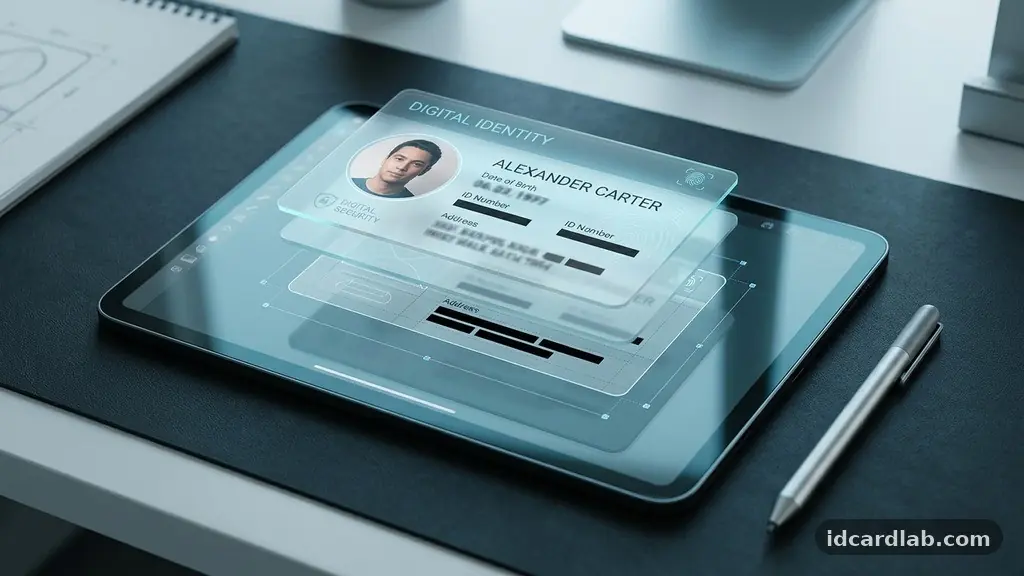
When you focus on protecting Personal Information When Designing ID Cards, you significantly reduce the risk of identity theft and unauthorized facility access. Every detail printed on a badge acts as a potential vulnerability if not handled with care. By prioritizing privacy-by-design, organizations can ensure that employees remain secure while maintaining professional standards.
This approach requires balancing the need for visual identification with the necessity of safeguarding sensitive PII. Whether you are issuing simple visitor passes or high-security government credentials, the strategies for securing data remain consistent. You will gain a clear understanding of how to audit your card templates and implement modern security features effectively.
Core Principles of Data Minimization
The first step in protecting Personal Information When Designing ID Cards involves applying the concept of data minimization. You should only include information that is strictly necessary for the card’s intended purpose.
If a person’s home address or personal phone number is not required for daily identification, remove it from the card layout entirely. Including excessive data points increases the impact of a lost or stolen credential.
Many organizations mistakenly believe that more information equals higher security. In reality, a card containing only a name, a photo, and a department identifier is often safer than one cluttered with employee IDs, birth dates, and job titles.
By stripping away non-essential PII, you limit the amount of intelligence a malicious actor can gather from a discarded or misplaced card. This practice also simplifies the design process, leading to cleaner, more readable identification badges.
When you must include sensitive data, consider whether it can be stored internally rather than displayed externally. For instance, an employee ID number can be encoded in a secure chip instead of being printed clearly on the front of the card. This shift ensures that only authorized readers can access the information, keeping the physical surface of the card relatively anonymous to the casual observer.
Utilizing Modern Encryption Standards
Physical security is only half the battle; the digital footprint of a card is equally critical. Modern smart card technology relies on advanced cryptographic protocols to ensure that data stored on the chip cannot be easily cloned or intercepted. When you implement these solutions, you must verify that your issuance system adheres to current industry encryption standards.
Avoid relying on legacy magnetic stripe cards, which store data in plain text and are easily susceptible to skimming. Instead, transition to contactless chip security that utilizes AES-128 or higher encryption.
These standards ensure that even if an attacker attempts to read the card via an RFID-enabled device, the data remains scrambled and unusable. Always consult with your hardware vendor to confirm the specific encryption capabilities of your card printers and encoders.
Updating your infrastructure to support these standards might require an initial investment, but the cost of a data breach is significantly higher. Organizations that fail to keep up with current technical standards often find themselves vulnerable to unauthorized cloning attempts. By choosing hardware that supports secure communication protocols, you protect both your organization and the individuals carrying the cards.
Implementing Physical Security Features
Beyond digital protection, the physical construction of the card acts as a deterrent against forgery. Tamper-evident materials are essential for preventing bad actors from altering information after the card has been issued. Using specialized laminates that show clear signs of attempted removal can alert security personnel to a compromised credential immediately.
Holographic overlays provide another layer of defense that is difficult to replicate. These optical security features make it nearly impossible for an amateur to create a convincing counterfeit.
When combined with microtext or guilloche patterns, the visual complexity of the card increases, making it much harder to manipulate or duplicate accurately. You should source these materials from reputable suppliers who specialize in high-security document production.
| Security Feature | Primary Benefit | Difficulty to Counterfeit |
|---|---|---|
| Holographic Overlays | Visual verification | High |
| Tamper-Evident Laminate | Prevents alteration | Very High |
| Encrypted Chip | Protects digital data | Extreme |
| UV Fluorescent Ink | Hidden identification | Moderate |
Managing Biometric Data Safely
Many modern systems now incorporate biometric data, such as fingerprints or facial recognition templates, to verify identity. While this provides a high level of physical access control, it also introduces significant privacy risks. If a biometric database is compromised, the impact is permanent because individuals cannot change their fingerprints or facial features like they can a password.
To mitigate this risk, never store the actual biometric image on the ID card itself. Instead, use a mathematical representation or a hash of the biometric data.
Even then, ensure this information is only accessible through a secure, encrypted handshake between the card and the reader. By following ISO/IEC 24789 standards for card identification, you can maintain consistency in how your system handles these sensitive identifiers.
Always inform employees about how their biometric data is being used and stored. Transparency is a key component of GDPR compliance and general ethical data management. If an employee expresses concerns about privacy, explain the specific encryption steps you have taken to protect their information from unauthorized access.
Addressing RFID and Contactless Risks
The convenience of contactless technology comes with the inherent risk of RFID skimming. A person with a high-gain antenna can potentially read the data on a card from several feet away without the owner ever knowing. To prevent this, you should consider using shielded badge holders that block unauthorized signal transmission.
For cards that do not require constant interaction with readers, you can also implement software-level controls. For example, some systems allow you to program the card to only respond to readers that provide a specific “challenge” signal. This ensures that the card remains “silent” until it is within the immediate proximity of an authorized, legitimate reader.
If your organization uses QR codes on ID cards, be mindful of the information they contain. A simple QR code can be scanned by any smartphone, making it a poor choice for sensitive data. If you must use them, implement QR code obfuscation by linking the code to a secure, time-limited URL rather than printing the actual PII directly in the code itself.
Compliance and Regulatory Considerations
Protecting Personal Information When Designing ID Cards is not just a best practice; it is often a legal requirement. Depending on your industry and location, you may be subject to strict data protection regulations. GDPR compliance, for instance, requires organizations to justify the collection and storage of any personal data.
Failure to adhere to these regulations can lead to substantial fines and loss of reputation. Before finalizing your card design, conduct a thorough audit of what data you are collecting and why. Document your findings and ensure that your data retention policies are aligned with the sensitivity of the information printed on the cards.
You should also keep detailed records of who has the authority to issue and revoke cards. Access to the card-printing software must be strictly controlled and audited. Only authorized personnel should be able to make changes to card templates or access the underlying databases that feed information into the printing system.
Establishing a Secure Issuance Workflow
The process of printing and distributing cards is a major security point. If a card is printed but not immediately secured, it can be stolen before it even reaches the intended recipient. Establish a clear chain of custody from the moment the card is printed to the moment it is handed to the employee.
Use a dedicated, secure room for all printing activities. Ensure that your printers are not connected to public networks and that all print jobs are encrypted during transmission. If you use a third-party service provider, verify their security certifications before signing any contracts.
- Use secure, locked transport containers for card distribution.
- Mandate a signature upon the receipt of every new ID card.
- Require the immediate return of expired or damaged cards for secure destruction.
- Perform random audits of the inventory of blank, high-security card stock.
- Maintain a digital log of every card issued, including the date and the recipient.
Frequently Asked Questions
Is it safe to print an employee’s full name on an ID badge?
Printing a full name is generally acceptable for identification, but you should avoid adding other details like home addresses or personal email addresses. If you are concerned about privacy, consider using only a first name and a last initial, or simply an employee number, depending on the requirements of your facility.
What should I do if an ID card is lost?
You must have a formal process for reporting and deactivating lost cards immediately. The system should allow you to blacklist the unique serial number of the lost card so that it no longer grants access to any physical areas or digital networks.
How often should ID card designs be updated?
You should review your card design and security features at least every two to three years. Technology changes rapidly, and what was considered secure five years ago may now be easily bypassed by modern skimming tools or counterfeiting techniques.
Can I use a smartphone instead of a physical ID card?
Mobile credentials are becoming a popular alternative to physical cards. They often utilize the phone’s built-in security features, such as face unlock or fingerprint scanning, which can be more secure than a plastic card that could be found and used by someone else.
What is the most secure way to dispose of old cards?
Never throw old ID cards in the trash. Use a cross-cut shredder specifically rated for plastic cards to ensure that the chip, the magnetic stripe, and the printed information are completely destroyed beyond recovery.
Maintaining Long-Term Security
Protecting Personal Information When Designing ID Cards is an ongoing commitment rather than a one-time project. As threats evolve, so too must your security measures. Regularly update your software, train your staff on the importance of data protection, and stay informed about new vulnerabilities in the identification industry.
By staying proactive, you create a culture of security that keeps your organization and its people safe. Always remember that your badge design is the first line of defense in your broader security strategy. Reach out to your IT and physical security teams to collaborate on a design that balances functionality with the highest standards of privacy.