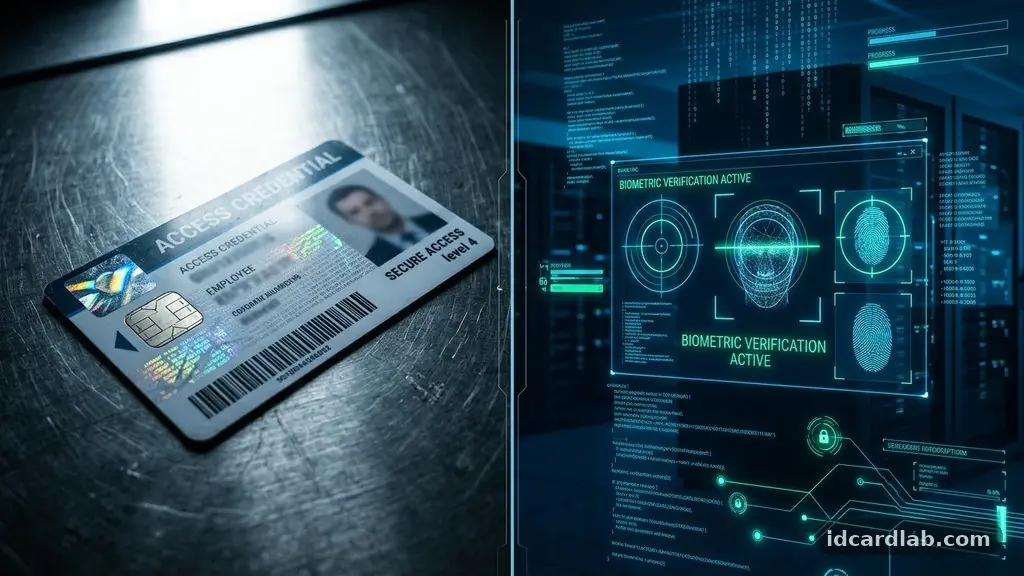
When weighing the choice between digital ID cards vs. physical ID cards, you are essentially evaluating how modern technology balances convenience against the foundational need for tactile security. Physical cards remain the global standard for reliability, while digital alternatives, such as the mobile driver’s license, are rapidly changing how we prove who we are in both physical and virtual spaces.
Understanding the trade-offs between these two formats helps you make informed decisions about your personal data security and daily accessibility. This article examines the practical differences, security protocols, and long-term implications of transitioning from traditional plastic credentials to smartphone-based identity solutions.
Core Differences in Security Infrastructure
The primary distinction between physical and digital credentials lies in their underlying security architecture. A physical ID card relies on static, tamper-evident features like holograms, microprinting, and laser engraving to prevent forgery.
These features require specialized equipment to replicate, making them a deterrent for casual counterfeiters. However, once a physical card is lost or stolen, it can be easily used by unauthorized individuals until the owner reports it missing.
Digital ID systems utilize advanced cryptographic security to ensure that data remains authentic and tied to the legitimate owner. These systems often leverage public key infrastructure to sign data packets, ensuring that the information presented has not been altered since issuance.
Because the data is stored in a secure element within your smartphone, it is protected by biometric authentication such as face recognition or fingerprint scans. This creates a multi-layered barrier that physical cards simply cannot match.
The Role of Biometric Authentication
Biometric authentication acts as the gatekeeper for digital identity, providing a level of protection that static plastic cannot offer. When you access a mobile credential, the phone verifies your identity locally before releasing any information to the scanner.
This prevents a person who finds your unlocked phone from necessarily accessing your sensitive ID data. It ensures that the person holding the device is the same person to whom the ID was issued.
Physical cards lack this immediate verification step, as they rely on a human observer to compare the photo on the card to the person standing in front of them. This process is prone to human error, fatigue, and social engineering.
By shifting to digital formats, organizations can automate the verification process, ensuring that the person presenting the ID is the authorized user. This shift reduces the reliance on manual checks, which are often the weakest link in identity verification.
Offline Accessibility and Reliability
A significant concern regarding digital IDs is their functionality when cellular networks or internet connections fail. Physical cards are inherently offline; they require no battery, software update, or signal to function.
You can present a plastic driver’s license in a remote area, a basement, or during a power outage with complete confidence. This reliability makes physical credentials the gold standard for emergency services and critical infrastructure access.
However, modern digital identity solutions are designed with offline accessibility in mind. Standards such as ISO 18013-5 govern how mobile driver’s licenses interact with readers using NFC technology and Bluetooth, allowing for secure data exchange without a network connection.
These protocols allow a reader to verify the digital signature of the ID directly from the device. While this requires the reader to have compatible hardware, it ensures that digital IDs remain viable even in environments where traditional internet connectivity is unavailable.
Data Privacy and Selective Disclosure
Physical ID cards often force you to reveal more information than is necessary for a specific transaction. When you buy age-restricted items, a physical card displays your full name, home address, date of birth, and license number.
A clerk only needs to know if you are over 21, yet they receive your entire personal history. This over-sharing of data increases your risk of identity theft and unnecessary data tracking.
Digital IDs enable selective disclosure, a feature that allows you to share only the minimum required information. Your phone can verify that you are over 21 without revealing your exact date of birth or your residential address.
This granular control is a major advantage for privacy-conscious individuals. By limiting the amount of data exposed during each interaction, you significantly reduce the footprint of your personal information in third-party systems.
Comparing Credential Features
The following table summarizes the key functional differences between the two formats across several critical categories of use.
| Feature | Physical ID Card | Digital ID Card |
|---|---|---|
| Verification Method | Visual inspection | Biometric/Cryptographic |
| Data Exposure | Full disclosure | Selective disclosure |
| Replacement Speed | Days to weeks | Instant |
| Hardware Dependency | None | Smartphone required |
| Tamper Resistance | Physical features | Digital signatures |
Managing Identity Theft Prevention
Identity theft prevention is a complex challenge, and both formats offer different strategies for mitigation. Physical cards are susceptible to physical theft and cloning, where a sophisticated actor copies the magnetic stripe or visual data.
Once a card is compromised, the owner often does not know until suspicious activity appears on their accounts. The recovery process involves filing police reports and contacting multiple agencies to freeze credit.
Digital IDs allow for real-time identity verification and instant revocation. If your phone is stolen, you can remotely wipe the device or deactivate the digital credential through your issuer’s portal instantly.
This immediate control prevents the thief from using the ID to commit fraud or access secure services. Furthermore, the use of hardware security modules ensures that even if a device is breached at a low level, the cryptographic keys remain inaccessible to attackers.
Implementation Challenges and Adoption
The transition to digital identity is not without significant hurdles, particularly regarding infrastructure and public trust. Businesses and government agencies must invest in new reader hardware to support NFC technology and QR-code scanning.
Without widespread adoption by merchants, a digital ID remains a secondary, less useful tool compared to the universal acceptance of plastic cards. This “chicken and egg” problem slows the rollout of digital programs globally.
Public perception also plays a major role in how quickly these systems are adopted. Many people are wary of storing sensitive documents on a device that is tracked by corporations and potentially vulnerable to software exploits.
Governments must ensure that data privacy regulations are strictly enforced to build the necessary trust. Until users feel that their digital footprint is as protected as their physical wallet, the reliance on plastic will persist.
- Instant updates: Digital IDs can reflect changes like address updates or status changes without requiring a new card.
- Multi-factor security: Combining a device PIN with biometric checks provides a stronger defense than a static card.
- Environmental impact: Reducing plastic manufacturing and shipping logistics lowers the carbon footprint of identity issuance.
- Universal acceptance: Physical cards are still required for international travel and many legacy systems where digital readers don’t exist.
- Accessibility: Digital IDs can be integrated with accessibility features for users with visual or motor impairments.
The Future of Contactless Credentialing
Contactless credentialing is the trajectory for the next decade of identification. We are moving toward a world where your phone acts as a hub for all your credentials, from transit passes to health records.
This integration streamlines daily tasks, such as checking into a hotel or passing through airport security. As remote identity proofing becomes more sophisticated, the need to visit a government office to renew an ID will decrease significantly.
However, the physical card will likely remain as a backup for the foreseeable future. A hybrid approach, where individuals carry a digital version for daily convenience while keeping a plastic card in a secure location, is the most logical path.
This redundancy ensures that you are never stranded without a way to prove your identity, regardless of technical failures. The goal is to maximize the speed and privacy of digital tools while retaining the permanence of physical records.
Frequently Asked Questions
Are digital IDs safer than physical ones?
Digital IDs offer superior protection against unauthorized use due to biometric requirements and the ability to selectively share data. However, they introduce new risks related to device security and software vulnerabilities that physical cards do not share.
Can I use my digital ID for international travel?
Currently, most international borders require a physical passport. While some countries are experimenting with digital travel credentials, physical documentation remains the standard for global transit.
What happens if my phone battery dies?
If your phone is dead, you lose access to your digital ID unless the device has a power reserve feature, which some modern smartphones include for transit and ID cards. This is why many experts recommend keeping a physical backup.
How do I know if a reader is secure?
Look for official logos or certification marks from the issuing government agency on the reader. Authentic readers use encrypted channels to communicate with your phone, ensuring that your data is not intercepted during the transaction.
Is my location tracked when I use a digital ID?
Legitimate digital ID systems are designed to minimize tracking. They generally do not transmit your location to the issuer each time you use the card, but you should check the privacy policy of your specific state or country’s app to be sure.
Final Perspectives on Credentialing
The evolution of digital ID cards vs. physical ID cards represents a broader shift toward a more efficient, privacy-centric society. While physical cards offer the unshakeable reliability of a tangible object, digital credentials provide the agility and security needed for our increasingly connected lives. Embracing this change requires a balanced view of both the benefits and the risks inherent in our digital infrastructure.
As you start using these mobile tools, remember to keep your software updated and maintain a physical backup for critical situations. The transition is not about abandoning the old for the new, but about layering technology to create a more resilient system for proving who you are. Start by exploring your local government’s digital ID offerings to see how these advancements can simplify your daily routine.