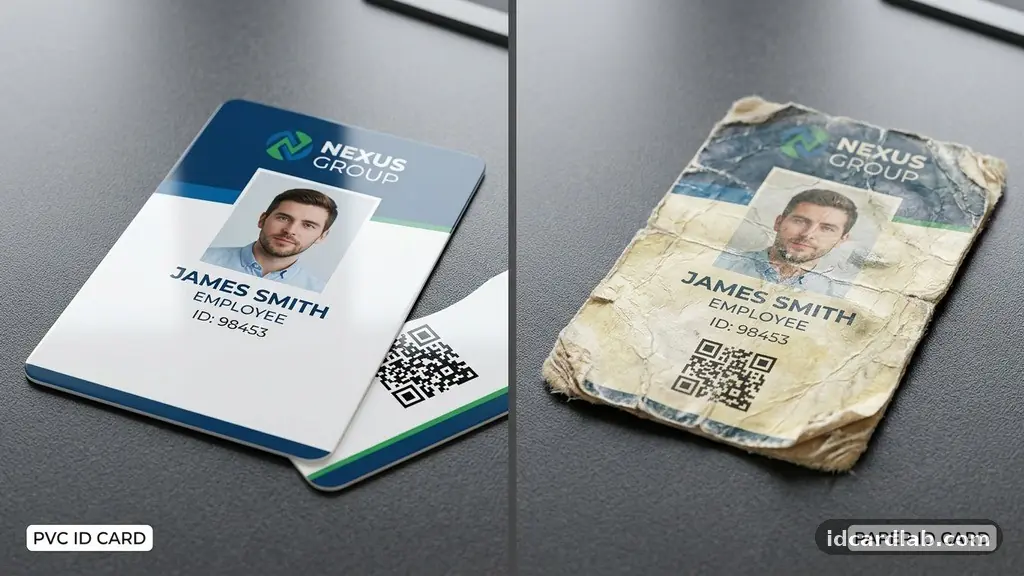
Choosing between PVC vs. Paper ID Cards requires balancing immediate budget constraints against long-term operational needs. While paper-based options offer a rapid, cost-effective solution for short-term events, polyvinyl chloride remains the industry standard for high-security environments and frequent daily use.
Understanding the physical properties and printing requirements of each material ensures your organization selects a solution that aligns with your specific security goals and environmental standards. This article examines the core differences in durability, printing technology, and functionality to help you determine which material fits your project requirements.
The Core Verdict on Durability and Longevity
The primary difference between these materials lies in their resistance to environmental stressors. PVC is a dense, synthetic plastic known for its high tensile strength and ability to withstand moisture, oils, and physical bending without cracking. When you opt for standard PVC, you are investing in a product that maintains its structural integrity for years, even in challenging conditions.
Paper-based cards, typically made from high-quality cardstock or synthetic paper, serve a different purpose. They are designed for limited lifespans, such as a single-day conference or a temporary visitor pass. While modern synthetic papers offer improved water resistance compared to standard office paper, they do not match the rigid, professional feel of a plastic card.
If your project involves daily access control or long-term employee identification, plastic is the clear winner for reliability. Paper options will degrade rapidly under the friction of card readers or the constant movement of a lanyard. For short-term event badges, however, the lightweight nature of paper can be a significant advantage in terms of comfort and logistical ease.
Printing Technologies Compared
The equipment required to produce these cards is a major factor in your total project cost. PVC cards are almost exclusively produced using thermal transfer printing technology, which uses heat to bond specialized ribbons directly to the card surface. This process creates crisp, high-resolution images that are resistant to fading.
Paper cards, by contrast, are more versatile in their printing requirements. You can often use standard high-end inkjet or laser printers for paper-based badges, which eliminates the need for a dedicated card printer. This makes paper an attractive option for smaller organizations that do not want to commit to the capital expense of specialized hardware.
However, the quality gap is noticeable. PVC allows for edge-to-edge printing and the integration of security features like holographic overlays.
Paper cards often leave a white border, and their porous surface can lead to ink bleeding if the printer settings are not perfectly calibrated. You must decide if the professional finish of a thermal-printed plastic card is necessary for your brand image.
Security Features and Functionality
When your project requires more than just a printed name, the material choice becomes critical for technical integration. PVC is the standard substrate for advanced features because it provides a stable, uniform surface for embedded technology. You can easily integrate a magnetic stripe or an RFID inlay into a PVC card during the manufacturing process.
Smart card technology, which uses internal chips for data storage and encryption, is virtually impossible to implement effectively on paper. The rigidity of PVC protects these delicate internal components from being crushed or damaged by the user. If your access control system relies on contactless proximity, you are essentially locked into using plastic or composite materials.
Paper cards are limited to visual verification and, at best, basic barcode scanning. While you can print a QR code on cardstock, it lacks the secure data encryption capabilities of a smart card. For high-security facilities, the ability to store data on a tamper-resistant chip makes PVC the only viable choice for long-term site security.
Environmental Impact and Sustainability
Many organizations are shifting their focus toward the environmental impact of their badge programs. PVC is a petroleum-based plastic that does not biodegrade, leading to concerns about waste management in large-scale events. While some PVC cards are recyclable, the specialized coatings applied during printing often make the recycling process complex and inefficient.
Paper-based solutions are frequently marketed as the greener alternative, especially when using recycled cardstock or biodegradable synthetic paper. These materials decompose much faster than plastic, which is a significant selling point for event organizers who produce thousands of badges for a single weekend. You can significantly reduce your event’s carbon footprint by choosing paper over plastic.
However, you must balance sustainability with utility. If a paper badge is discarded and replaced three times during a week-long conference, the total environmental cost may exceed that of a single, durable PVC card used for the same duration. Assess the lifecycle of your badge before making a choice based solely on material composition.
Financial Considerations for Implementation
Budgeting for your identification program involves more than just the cost of the cards themselves. PVC cards have a higher unit cost, often ranging from several cents to a dollar per card depending on the volume and embedded features. You must also account for the cost of ribbons, cleaning kits, and the printer itself.
Paper cards are significantly cheaper in terms of raw materials. You can source professional-grade cardstock in bulk for a fraction of the price of PVC blanks. If your organization already owns laser printers, the cost of implementing a paper-based ID system is nearly negligible, requiring only the purchase of precut card stock or sheets.
The table below provides a quick comparison of the financial and operational factors for both materials.
| Factor | PVC Cards | Paper-Based Cards |
|---|---|---|
| Unit Cost | Moderate to High | Low |
| Printer Cost | High (Thermal Transfer) | Low (Standard Office) |
| Durability | High (1-5+ Years) | Low (1-7 Days) |
| Tech Integration | Full (RFID/Smart Card) | Limited (Barcode/QR) |
| Environmental | Low Recyclability | High Recyclability |
Standardization and Professionalism
Industry norms often dictate the material you should use based on the user’s role. Most corporate offices follow ISO 7810 standards, which define the physical dimensions and properties of identification cards. These standards were written with the durability of plastic in mind, ensuring that cards fit perfectly into standard wallet slots and badge holders.
Using paper cards in a corporate setting can inadvertently signal a lack of professionalism or a temporary status. Employees carrying paper badges may feel less valued than those with permanent plastic credentials. If your project is about establishing a permanent company culture, the tangible quality of a PVC card is a subtle but important factor.
Conversely, for trade shows or festivals, a paper or biodegradable synthetic badge is an accepted industry norm. Attendees expect a badge that is easy to wear and dispose of at the end of the event. Matching the material to the expectations of your audience is just as important as the cost-benefit analysis of the materials themselves.
Management of Card Printers
Maintaining a card printer is a specialized task that requires consistent attention. PVC card printers require regular cleaning cycles to prevent dust from interfering with the thermal print head. If you ignore these maintenance requirements, you will quickly see streaks or white patches on your finished IDs.
Paper-based systems are much more forgiving. If your office laser printer has a paper jam, it is a routine issue that any staff member can fix in seconds. The technical barrier to entry for paper printing is significantly lower, which can save your IT or administrative department hours of troubleshooting time.
Evaluate the technical expertise available in your team before deciding on a PVC system. If you do not have a dedicated person to manage card printer maintenance, the frustration of a malfunctioning thermal printer might outweigh the benefits of the high-quality plastic output. Consider outsourcing the printing if you need the quality of PVC without the management headache.
Strategic Decision-Making Framework
To choose the right material, you must first define your specific project requirements. Start by listing the primary purpose of the card: is it for daily access, a one-time event, or a membership program? If the card needs to interact with an electronic reader, you must prioritize PVC as your base material.
Next, consider the total volume of cards needed over the next twelve months. High-volume, recurring needs often justify the purchase of a dedicated card printer and the use of PVC. Low-volume or sporadic needs are almost always better served by paper-based solutions that utilize existing office equipment.
Finally, factor in the “perceived value” of the badge. A thick, glossy PVC card carries an air of authority and permanence that a flimsy paper badge cannot replicate. If the card serves as a status symbol or a key to high-security areas, the extra cost of PVC is an investment in your organization’s security and reputation.
Frequently Asked Questions
Can I print on PVC cards with a standard home office printer?
No, you cannot. Standard inkjet or laser printers use liquid ink or toner that does not adhere to the non-porous surface of plastic. Attempting this will result in smudged, illegible prints and may damage the internal components of your office printer.
How do I make my PVC cards more environmentally friendly?
Look for manufacturers that offer “eco-friendly” PVC alternatives, which are often made from recycled plastic or biodegradable additives. Additionally, you can implement a collection program at your facility to ensure used cards are sent to a specialized recycling facility rather than the trash.
What is the shelf life of a paper ID badge?
A standard paper badge will typically last for one to two days of moderate use before it begins to fray or show signs of wear. If you use a heavy-duty synthetic paper or add a protective plastic sleeve, you can extend the life of a paper badge to several weeks.
Are there hybrid options between PVC and paper?
Yes, some companies offer composite cards that combine a plastic core for durability with a paper-like finish that is easier to print on. These are often used for high-end event badges that need to look professional but do not require the full-scale security features of a standard employee ID.
Which material is better for outdoor events?
PVC is significantly better for outdoor use because it is waterproof and resistant to UV rays. Paper badges, even when laminated, are prone to moisture damage and will quickly fall apart if exposed to rain or heavy humidity throughout an outdoor project.
Final Thoughts on Material Selection
Deciding between PVC vs. Paper ID Cards is a strategic choice that balances your immediate budget against the long-term needs of your organization. While paper offers a quick, inexpensive fix for temporary events, the durability and security features of PVC remain essential for professional environments.
By carefully weighing the printing requirements, environmental impacts, and the specific function of your badges, you can ensure your project is both functional and cost-effective. Assess your volume and security needs today to determine which path provides the most value for your specific operation. If you need further guidance on integrating these cards into your existing security infrastructure, reaching out to a professional printing consultant is a great next step to ensure a smooth implementation.