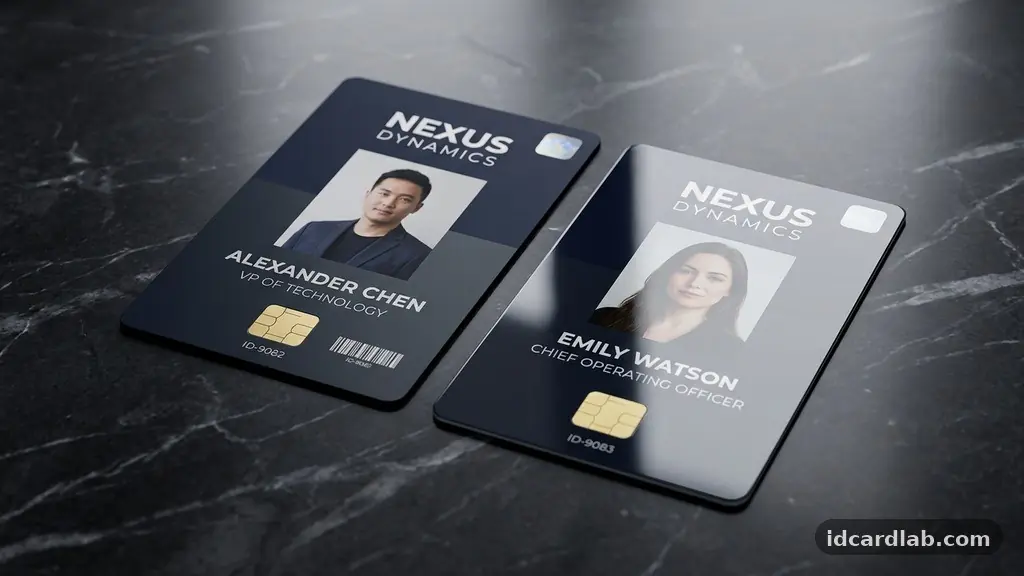
Choosing between matte vs. glossy ID cards is a fundamental decision that impacts how your organization is perceived and how well your credentials hold up under daily use. While glossy finishes offer a vibrant, high-contrast look, matte surfaces provide a sophisticated, glare-free aesthetic that often feels more premium in professional settings.
Understanding the nuances of surface finish allows you to align your physical security tools with your brand identity while ensuring long-term utility. This article breaks down the specific trade-offs regarding durability, visual clarity, and the printing technologies required to achieve the best results for your specific ID badge program.
Visual Impact and Professional Branding
The most immediate difference you will notice is the way light interacts with the surface of the card. Glossy cards reflect light directly, which creates a high-shine, polished look that makes colors appear deeper and more saturated. This finish is frequently chosen by organizations that want their logos and photos to pop with high contrast and intensity.
Matte finishes, by contrast, absorb light rather than reflecting it. This creates a soft, muted appearance that is often associated with high-end business cards or luxury membership credentials. Because there is no glare, matte cards are significantly easier to read under harsh overhead lighting or when being photographed for digital archives.
If your brand identity relies on bold, vibrant colors, the glossy finish will likely be your preference. If your brand is defined by a sleek, minimalist aesthetic, a matte finish will communicate that identity more effectively. Both choices influence how a person perceives the quality of the card the moment they hold it.
Durability and Long-Term Wear
When comparing matte vs. glossy ID cards, durability is often the deciding factor for high-traffic environments. Glossy cards are more prone to showing surface scratches because the reflective coating highlights every minor abrasion. Over time, these scratches can accumulate, making the card look worn or difficult to scan.
Matte cards are generally superior when it comes to hiding daily wear and tear. The textured surface helps mask fine scratches and scuffs that would be immediately visible on a high-gloss surface. If your employees or members carry their IDs in pockets or bags where they rub against keys and coins, the matte finish will maintain a clean appearance for a longer duration.
Fingerprint smudges are another practical consideration for high-touch environments. Glossy surfaces are notorious for picking up oils from the skin, which can become distracting and even obscure important text. Matte finishes are far more forgiving, as the surface texture prevents oils from leaving noticeable, smeary marks.
Printing Technology Compatibility
The method used to print your ID cards significantly impacts how a matte or glossy finish behaves. Most standard printers utilize dye-sublimation or thermal transfer technologies to apply images and text onto PVC card stock. These processes work best when the surface is specifically designed to accept the ribbon’s heat and pigment.
If you are using a standard desktop card printer, you are likely limited to the finish of the PVC stock you purchase. You can buy pre-finished matte or glossy cards, or you can use a lamination module to apply a specific finish after printing. This lamination layer acts as a protective shield that dictates the final look of the card.
It is important to ensure your printer settings are calibrated for your chosen finish. For instance, some printers require a specific heat intensity to properly bond the dye to a matte surface, which is often more porous than glossy stock. Ignoring these technical requirements can lead to faded colors or peeling laminates, regardless of which aesthetic you prefer.
Comparing Performance Factors
To help you decide which finish suits your operational needs, consider how different environmental and functional factors impact the longevity and usability of your credentials. The following table provides a direct comparison of these two finishes across common performance categories.
| Factor | Glossy Finish | Matte Finish |
|---|---|---|
| Glare/Reflection | High reflection | Minimal reflection |
| Scratch Visibility | Highly visible | Well-hidden |
| Fingerprint Smudges | Very noticeable | Resistant |
| Color Vibrancy | High impact | Subtle/Sophisticated |
| Readability | Variable under light | Excellent |
Security Features and Overlays
When adding security features like a holographic overlay, the surface finish matters immensely. A holographic overlay is designed to prevent tampering and counterfeiting, but its effectiveness depends on how well it adheres to the card surface. Glossy finishes provide a very smooth base, which allows for a crisp, clear application of security films.
Matte surfaces can sometimes make holographic overlays appear slightly diffused or less sharp. However, the added texture of a matte card can make it more difficult for a counterfeiter to replicate the specific finish of your authentic badges. You should test your security films on both surfaces if you plan to use advanced authentication markers.
If your cards include high-security elements like a smart card chip or a magnetic stripe, the finish of the card body remains important. You must ensure that the printing process does not interfere with the encoding of the magnetic stripe. Always consult the National Institute of Standards and Technology guidelines for physical access control systems to ensure your cards meet industry compliance standards.
Common Selection Considerations
Choosing between these options isn’t just about appearance; it’s about matching the card to the user’s role. Here are several factors to weigh before placing your next order for card stock:
- Frequency of use: Does the card need to be swiped daily or merely displayed?
- Environmental conditions: Will the card be exposed to sunlight, heat, or moisture?
- Branding goals: Does your logo require high-saturation colors to look accurate?
- Security requirements: Are you using visual validation like holograms or UV marks?
- Budget constraints: Is the cost of specialized lamination modules within your project scope?
If your facility requires staff to frequently present their badges for visual inspection by security guards, a matte finish is often the better choice. It prevents the guard from having to tilt the card to avoid glare, which speeds up the entry process. Conversely, if your cards are intended for high-end events or VIP access, the glossy finish provides a sense of prestige.
Maintenance and Cleaning Practices
Regardless of the finish you choose, keeping your ID cards clean is essential for their lifespan. Glossy cards should be wiped down periodically with a microfiber cloth to remove oils that can degrade the plastic surface over time. Avoid using harsh chemical cleaners, as these can strip the protective UV coating and cause the print to fade.
Matte cards are less sensitive to surface oils but can accumulate dust in their fine texture. A simple dry wipe or a light cleaning with a specialized card cleaner will suffice. If you notice the edges of your cards starting to fray, this is a sign that the PVC card stock quality may be too low for the level of daily handling.
Proper storage also plays a role in how your cards age. Encourage employees to use high-quality badge holders that prevent excessive bending or heat exposure. Even a high-quality matte or glossy finish will fail if the underlying PVC card stock is subjected to extreme temperatures, which can cause the plastic to warp or the internal chip to malfunction.
Frequently Asked Questions
Do glossy cards fade faster than matte cards?
No, the rate of fading is primarily determined by the quality of the ink and the UV protection applied during the printing process. However, scratches on a glossy card can make the surface look faded or worn much faster than on a matte card.
Can I apply a matte finish to a card after it has been printed?
Yes, you can use a thermal lamination patch to apply a matte finish to a pre-printed card. This is a common way to add durability and a specific aesthetic to cards produced on standard desktop printers.
Which finish is better for barcode and QR code scanning?
Matte finishes are generally better for scanning because they eliminate the glare that often causes errors with barcode scanners. Glossy cards can sometimes reflect the scanner’s light, requiring the user to adjust the angle of the card to get a successful read.
Is there a significant price difference between matte and glossy card stock?
The price difference is usually negligible for standard PVC stock. The cost variations typically arise from the type of printer ribbons and the lamination patches you choose to achieve your desired finish.
Do smart card chips work better with one finish over the other?
The finish itself does not affect the functionality of a smart card chip. The chip is embedded in the card stock, and as long as the surface finish doesn’t interfere with the contact points, both matte and glossy cards will function perfectly.
Final Thoughts
Deciding between matte vs. glossy ID cards involves balancing the need for visual appeal with the reality of daily usage. Glossy cards excel in environments where branding and high-impact visuals are the priority, whereas matte cards offer a more durable, glare-free, and professional experience for high-traffic workplaces. By considering how your staff interacts with their credentials, you can make a choice that enhances both the look and the longevity of your ID program.
Take the time to test samples under your facility’s specific lighting conditions to ensure the final product meets your expectations. Whether you choose the high-shine appeal of gloss or the understated elegance of matte, your commitment to a consistent, high-quality finish will reflect well on your organization’s professional standards.